Right-Wing Critics of American Conservatism by George Hawley
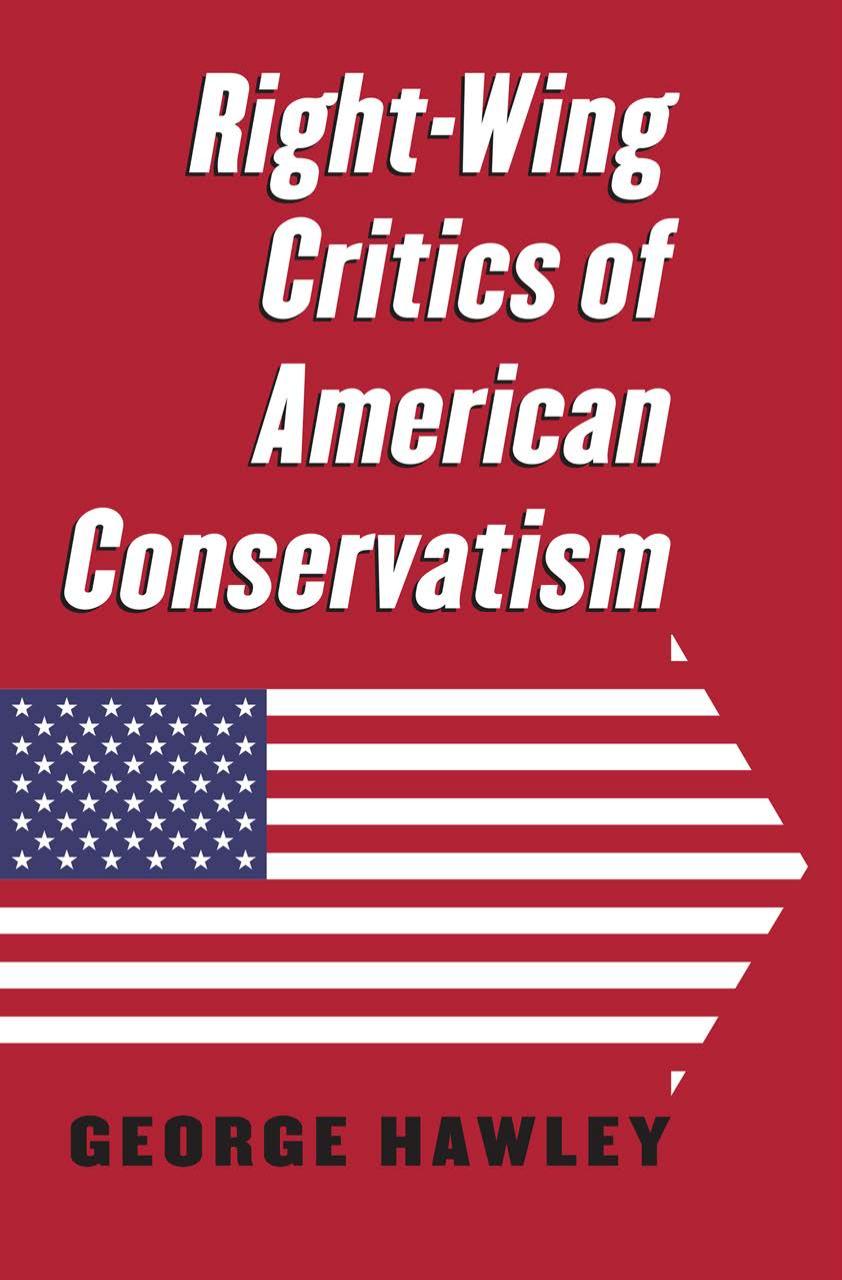
Author:George Hawley
Language: eng
Format: epub, pdf
ISBN: 9780700621989
Publisher: University Press of Kansas
Published: 2016-01-13T05:00:00+00:00
Thomas Fleming and Chronicles
Different trends within right-wing thought are generally associated with particular magazines. National Review has long been the flagship journal of the mainstream conservative movement. Commentary, and more recently the Weekly Standard, are the main voices of neoconservatism. The main venue for paleoconservative thought was and remains Chronicles, which is published by the Rockford Institute—perhaps the only paleoconservative think tank. Like the Mises Institute, the Rockford Institute is ostentatiously distant from the major metropolitan areas on the coasts; it is located in Rockford, Illinois.
The Rockford Institute was founded in 1976 by John Howard, but the figure most associated with the think tank and its journal is Thomas Fleming. Fleming, a classicist, earned his PhD at the University of North Carolina, Chapel Hill, where he met two like-minded graduate students and future collaborators: Clyde Wilson and Sam Francis.33 Fleming’s first foray into publishing was the short-lived Southern Partisan Quarterly Review, a journal intended to represent the Southern intellectual tradition that first appeared in 1979. Like many others in the paleoconservative ideological camp, much of Fleming’s work is an open defense and celebration of the South. In his contribution to the 1982 edited volume, The New Right Papers, Fleming approvingly noted that many of the most socially conservative voices in Washington, DC, came from the South.34
Fleming argued that Northern conservatives solely interested in propping up the capitalist system are not conservative at all; in contrast, conservatism had a decidedly different, more authentic, meaning in the South:
It is obvious to anyone that many capitalist “conservatives” are nothing better than nineteenth century liberals with a hangover. Their libertarian ideas of freedom, expressed almost always in economic terms, are tempered only by the recognition that it takes force to keep the discontented masses in their place. However, when a Southerner calls himself conservative, he is usually thinking of a way of life, of a social order and a moral order for which the people of the 1860s went to war. He is more disturbed by the disintegration of the family than by rising interest rates. He believes in Free Enterprise and might even be happy to go to war to resist Soviet aggression, but he is not so delighted with the mobility and tawdriness of modern life, with the fast food and the fast buck artists who seem intent on turning the New South into a suburb of Chicago. He does not like to see family farms swallowed up by Agribusiness in the interest of progress and productivity. Above all, he knows the value of stability and the price of progress.35
In the above passage, we immediately recognize similarities between this brand of paleoconservatism and the localist ideology examined in chapter 4. Indeed, the two cannot always be easily distinguished, and writers associated with localism, such as Bill Kauffman, have written for Chronicles in the past. It is at this point that I should again note that there is not a fixed and consistent definition of paleoconservative, as Fleming himself has acknowledged. Fleming argued
Download
Right-Wing Critics of American Conservatism by George Hawley.pdf
This site does not store any files on its server. We only index and link to content provided by other sites. Please contact the content providers to delete copyright contents if any and email us, we'll remove relevant links or contents immediately.
| Anthropology | Archaeology |
| Philosophy | Politics & Government |
| Social Sciences | Sociology |
| Women's Studies |
The Secret History by Donna Tartt(19085)
The Social Justice Warrior Handbook by Lisa De Pasquale(12190)
Thirteen Reasons Why by Jay Asher(8909)
This Is How You Lose Her by Junot Diaz(6885)
Weapons of Math Destruction by Cathy O'Neil(6279)
Zero to One by Peter Thiel(5801)
Beartown by Fredrik Backman(5751)
The Myth of the Strong Leader by Archie Brown(5507)
The Fire Next Time by James Baldwin(5442)
How Democracies Die by Steven Levitsky & Daniel Ziblatt(5218)
Promise Me, Dad by Joe Biden(5153)
Stone's Rules by Roger Stone(5087)
A Higher Loyalty: Truth, Lies, and Leadership by James Comey(4960)
100 Deadly Skills by Clint Emerson(4924)
Rise and Kill First by Ronen Bergman(4788)
Secrecy World by Jake Bernstein(4752)
The David Icke Guide to the Global Conspiracy (and how to end it) by David Icke(4717)
The Farm by Tom Rob Smith(4507)
The Doomsday Machine by Daniel Ellsberg(4490)
